
Why do hotel supplies often come from China, especially when they shouldn't?
Hotels around the world rely on thousands of products to keep rooms, lobbies, restaurants, spas, and back-of-house areas well-maintained. From towels and slippers to lights, minibars, mirrors, furniture, and special items, these products are often sourced in large quantities and are needed immediately.
China is the country that controls this supply chain the most compared to all other countries.
For many years, China has been the main place in the world for producing hotel supplies because it can produce a lot quickly, at a low cost, and from many different suppliers. When a hotel is building new rooms, refurbishing old ones, or acquiring new supplies, China is usually one of the first countries they think of buying from.
However, China is not always the right choice for every hotel product. Some accessories may be better sourced locally, from neighboring countries, or from specialized manufacturers in Europe, North America, or Southeast Asia.
This guide explains why many hotel supplies come from China, the benefits of buying from there, and when hotels should consider looking for other sources for their supplies.
Why did China become the biggest supplier of hotel accessories?
China became the main place for hotel supplies because it built a huge system of factories that can make almost any kind of hotel item.
Instead of getting fabric from one country, lights from another, furniture from a third, and bathroom accessories from a different place, hotel buyers can often buy everything they need from suppliers in China all at once.
The strength of labor in manufacturing in China comes from several reasons:
- Large factory networks
- Competitive labor and production costs
- Established export systems
- Strong supply chains for raw materials
- Flexible customization capabilities
- Fast production for bulk orders
- Wide variety of product categories
This makes China a very good place for hotel builders, purchasing companies, managers who buy things, and buyers of hotel supplies to quickly and easily set up entire hotels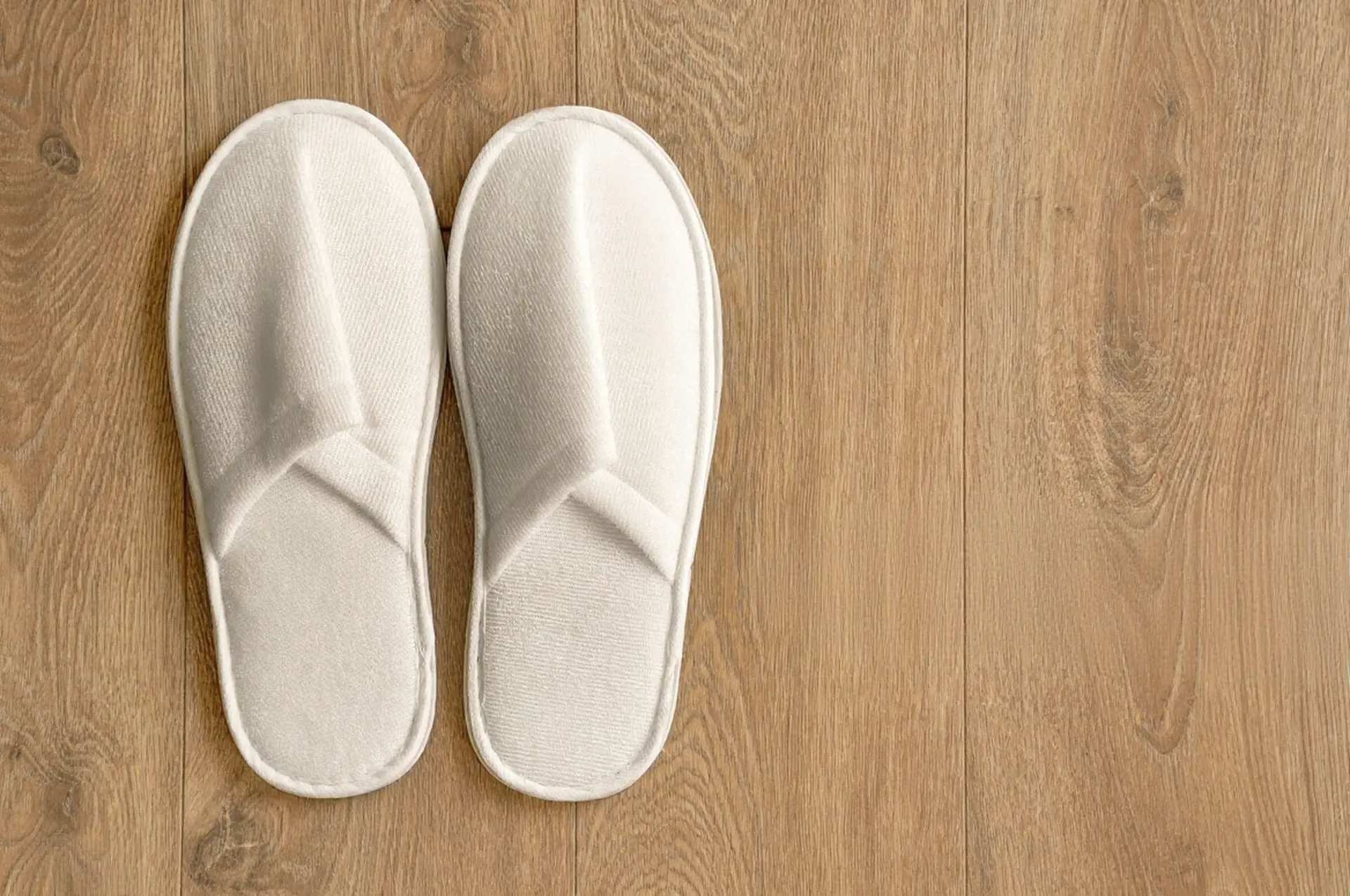
Main Advantages of Sourcing Hotel Accessories from China
1. Lower Prices Compared to Many Other Markets
One of the main reasons why hotels buy from China is to save costs. Manufacturing in China is generally cheaper because they carry out large-scale production, have large groups of suppliers, and have an efficient production system. For hotels that buy a lot of items, even a small change in price can help save a significant amount.
Examples of lower-cost hotel accessories from China include:
- Slippers
- Hangers
- Bathroom trays
- Tissue box covers
- Kettles
- Hair dryers
- Towels
- Bed linens
- Laundry bags
- Decorative cushions
- Waste bins
- Guestroom mirrors
- Basic lighting fixtures
This is very important for cheap hotels, budget hotels, apartments you can stay in, and large hotel groups that need to track how much they spend in many different locations.
2. Massive Product Variety
China sells a wide variety of hotel accessories in all styles, materials, and quality levels.
Buyers can source:
- Luxury bathroom accessories
- Eco-friendly bamboo items
- Stainless steel room accessories
- Minimalist Scandinavian-style décor
- Traditional Asian-inspired accessories
- Custom-branded guestroom items
- Smart hotel devices
- Sustainable packaging solutions
This type of product helps hotels showcase what their brand is about. A small boutique hotel may choose decorations that look handmade, while a busy city hotel may choose simple and modern accessories.
3. Easier Customization and Branding
Many Chinese companies can put your name on products and modify them to suit your preferences.
Hotels can add:
- Logos on slippers, towels, and robes
- Custom packaging
- Unique colors and finishes
- Special dimensions for furniture or mirrors
- Brand-specific room accessories
- Customized amenity trays and bathroom sets
This helps hotels provide guests with a special and consistent experience. Instead of using regular products, hotels can create their own unique products that showcase who they are.
4. One-Stop Sourcing Convenience
China allows hotels to buy multiple product categories from a single country and sometimes even from a single supplier or sourcing partner.
For example, one procurement company may source:
- Guestroom accessories
- Bathroom products
- Furniture
- Decorative lighting
- Restaurant tableware
- Spa products
- Outdoor furniture
- Housekeeping carts
- Luggage racks
- Minibars
This is very important for budget hotels, mid-priced hotels, apartments you can stay in, and large hotel groups that want to keep their costs low in many places. 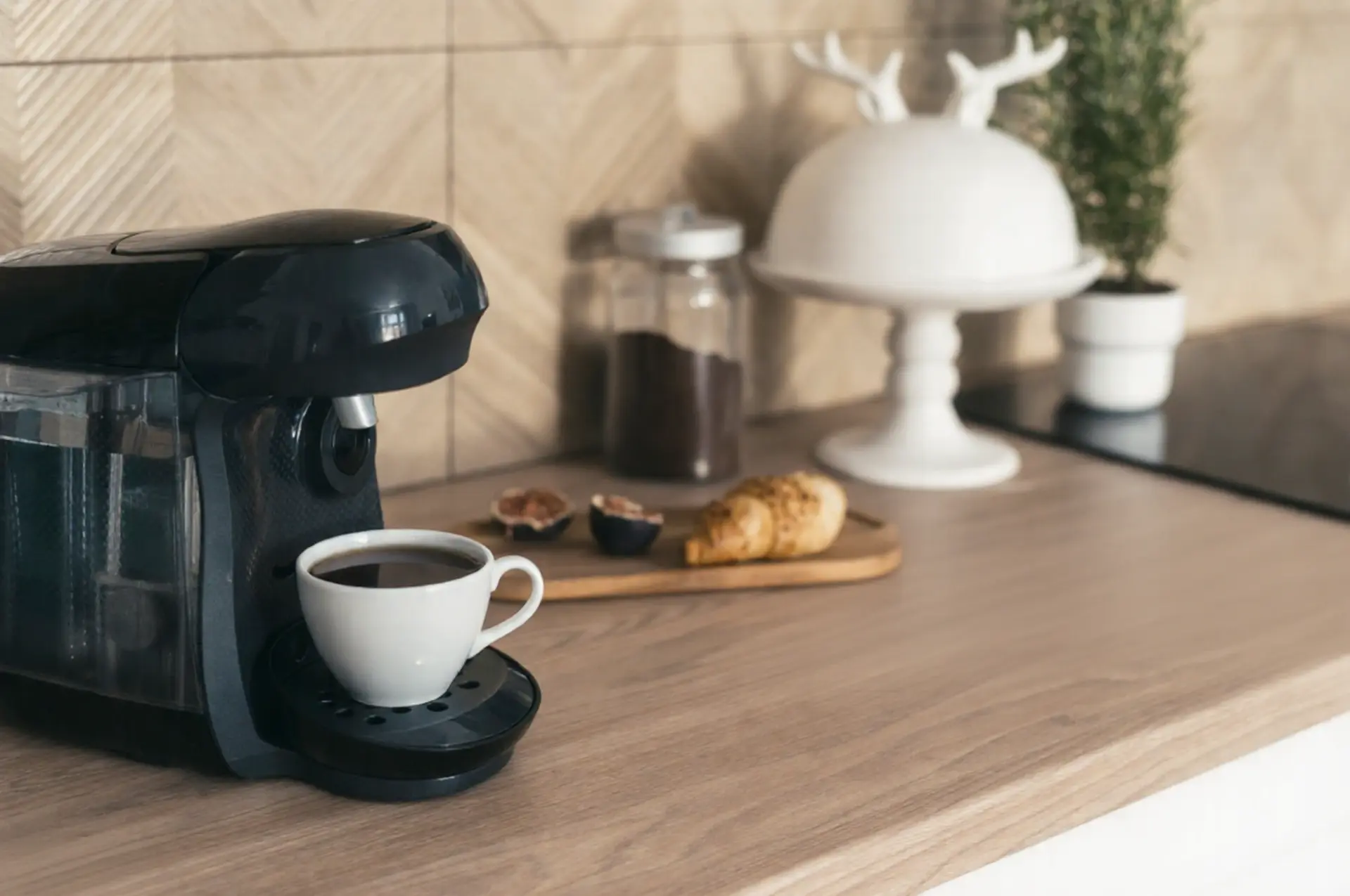
5. Strong Export Experience
Companies in China have become accustomed to sending their products to many countries everywhere.
Most established suppliers already understand:
- International shipping requirements
- Export packaging standards
- Hotel industry specifications
- Compliance documentation
- Product testing requirements
- Bulk order logistics
- Delivery timelines
This makes it easier for people around the world to book hotels.
Many suppliers also work regularly with hotel chains, procurement companies, interior designers, and hospitality project managers.
Hotel Accessories Commonly Sourced from China
Many hotel products are suitable for Chinese sourcing because they are fairly uniform, easy to produce in large quantities, and not heavily reliant on local regulations.
These commonly include:
- Towels and bathrobes
- Bed sheets and pillowcases
- Slippers
- Guestroom kettles
- Hair dryers
- Bathroom accessory sets
- Decorative lighting
- Wall art and décor
- Mirrors
- Waste bins
- Hangers
- Luggage racks
- Desk accessories
- Amenity trays
- Tissue box covers
- Laundry bags
- Minibars
- Room safes
- Housekeeping supplies
- Restaurant tableware
- Banquet furniture
- Outdoor hotel furniture
For these groups, China often provides the optimal combination of value, quality, and access. 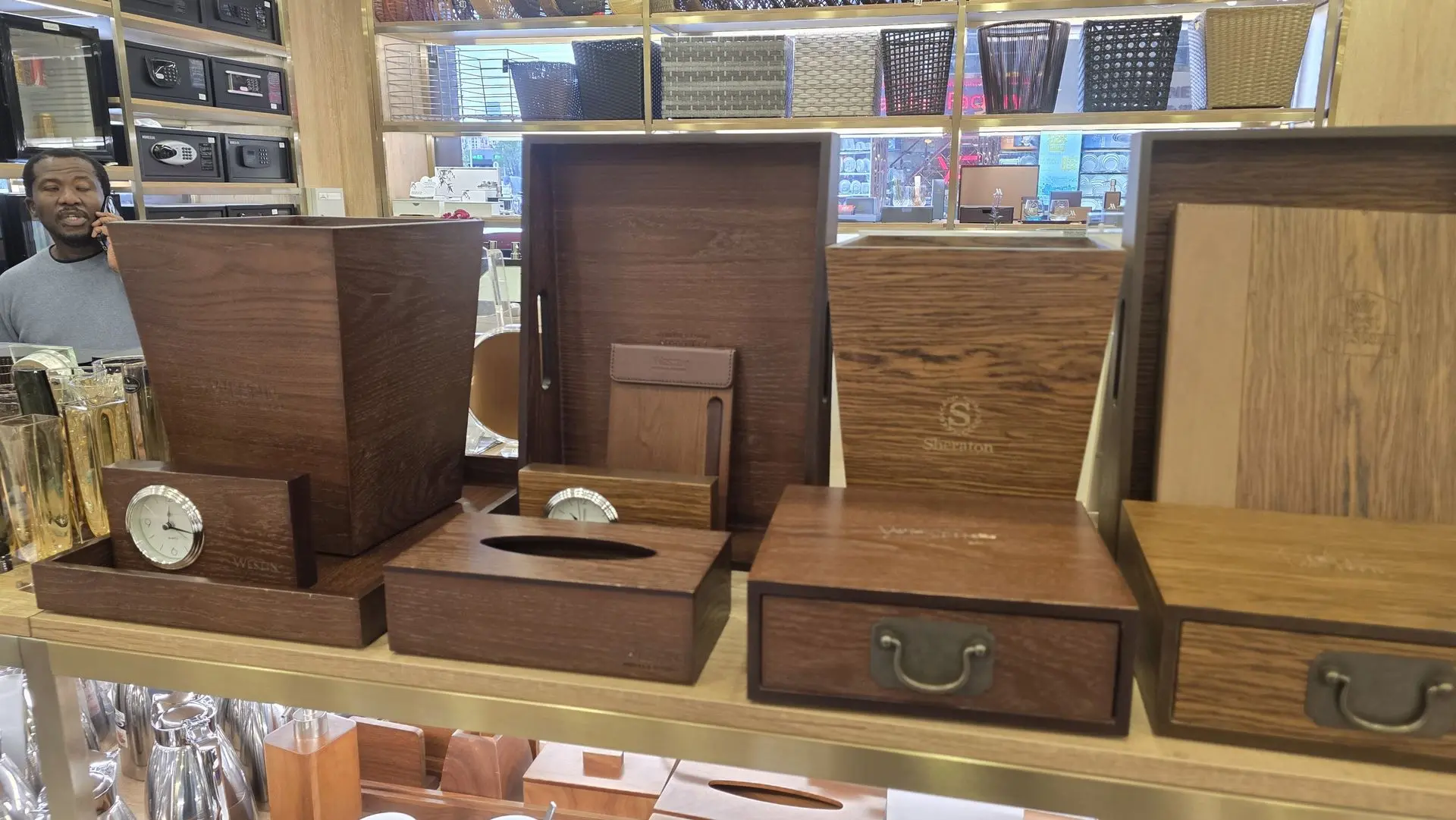
When Hotels Should Not Source from China
Large, heavy, or bulky items can be expensive to bring from another country.
1. When Shipping Costs Are Too High
Large, heavy, or bulky products can become expensive to import.
Items such as:
- Stone bathtubs
- Heavy furniture
- Large marble tables
- Oversized mirrors
- Massive decorative sculptures
The costs associated with shipping are very high.
Using local sourcing can lower costs, shorten delivery times, and reduce the likelihood of damage during transportation.
2. When Faster Delivery Is Needed
Shipments of imported products to China usually take weeks or even months to arrive.
Hotels undergoing urgent renovation often face time constraints and limited preparation time.
Local suppliers are well suited to meet urgent needs quickly and efficiently.
Examples include:
- Replacement mattresses
- Urgent towel restocking
- Quick furniture replacements
- Broken lighting fixtures
- Spare housekeeping items
3. When Local Regulations Matter
Hotel products must comply with established quality and safety standards.
These may include:
- Fire-rated doors
- Electrical appliances
- Emergency lighting
- Elevators
- Smoke detectors
- HVAC systems
- Wiring and switch systems
Hotels generally favor local or certified international suppliers that comply with all relevant regulations and standards.
4. When Craftsmanship Is More Important Than Price
Sometimes, luxury hotels value more the products created by hand or from the specific area that provide a more authentic experience for the guests.
Examples include:
- Handmade furniture from Italy
- Artisan ceramics from Portugal
- Premium glassware from Europe
- Local woven baskets
- Traditional wood carvings
- Handmade textiles
In such cases, China is not always a good fit because the hotel values difference, culture, or design more than value.
5. When Sustainability and Carbon Footprint Are Priorities
There are hotels that are attempting to reduce their emissions and improve their sustainability procedures.
Long-distance shipping from China can increase a hotel's carbon footprint, particularly for large items.
Hotels focused on sustainability may choose:
- Locally made furniture
- Regional textiles
- Recycled décor materials
- Shorter-distance supply chains
- Eco-certified suppliers closer to the project site
This approach may cost more, but it can strengthen a hotel's environmental positioning.
How Hotels Can Balance China and Local Sourcing
The most effective way to book a hotel is often a combination of the two.
Hotels can provide high-volume, price-sensitive standard products from China, while having meaningful, fast, local, or highly customized items closer to the project site.
For example:
- Source towels, slippers, bathroom accessories, and lighting from China
- Source heavy furniture locally
- Source handcrafted décor from local artisans
- Source emergency replacement products from nearby vendors
- Source regulated electrical products from certified local suppliers
This type of strategy gives hotels the opportunity to reduce their costs while ensuring flexibility, high quality, and brand identity.
Conclusion
China remains the leading source of hotel accessories due to its ability to offer competitive pricing, a wide variety of products, customization options, and reliable export capabilities.
For many common hotel uses, China remains the most practical and cost-effective.
However, it is not right that all hotels rely only on China for their supplies. Shipping costs, delivery times, regulations, sustainability goals, and the need for local design may weigh on other procurement options.
The smartest hotel acquisition teams know when to use China for value and scale—and when to look elsewhere for speed, compliance, craftsmanship, or local authenticity.